WHOOP and the Australian Open: A reminder that data is the golden asset in sport
During my speech at our Sports Industry Breakfast in December, I talked about some of SHERIDANS | Sports’ predictions for the sports industry, for 2026 and beyond (you can read the team’s predictions here).
One area I touched on in the speech was the increasing value of sports data; but I didn’t spend much time on it because sports data has long been a golden asset, so it could hardly be described as a prediction (certainly not a groundbreaking one, anyway). However, the recent ban on WHOOP devices at the Australian Open (Australian Open 2026: Why were Carlos Alcaraz and Jannik Sinner told to take off fitness trackers? - BBC Sport) has intensified the global conversation on how important data has become, and it serves as a reminder that data now sits at the centre of modern sport, shaping how athletes train, and also how fans connect and engage with the sport.
In my time as Head of Sport at SHERIDANS, there have been extraordinary advances in wearable technology, biometrics, and real‑time analytics, a development in the sports industry that has played to SHERIDANS’ strengths. Devices like WHOOP and Oura (I am an obsessive user of both myself!), which track metrics such as heart rate variability, sleep quality, strain, and recovery, have now made data and analytics available to the “normal” person, or the amateur athlete. That has been a game changer, both in terms of health monitoring but also in terms of a fans’ interest in athlete performance data (i.e. how does my data compare to Rory McIlroy or Carlos Alcaraz?).
Leaving aside the fact that the WHOOP ‘controversy’ at the Australian Open was excellent publicity for the device, it illustrates how central these tools have become. Several top players—including Carlos Alcaraz, Jannik Sinner, and Aryna Sabalenka—were instructed to remove their WHOOP trackers before matches, despite the devices being approved by the International Tennis Federation for use in competition. Players expressed frustration, because performance data is a competitive necessity. But there is also a commercial element to this too, as many athletes have sponsorship deals with these types of devices (Rory McIlroy is, for example, an investor in WHOOP, as is Patrick Mahomes amongst others (Whoop valued at US$1.2bn after US$100m funding round - SportsPro)).
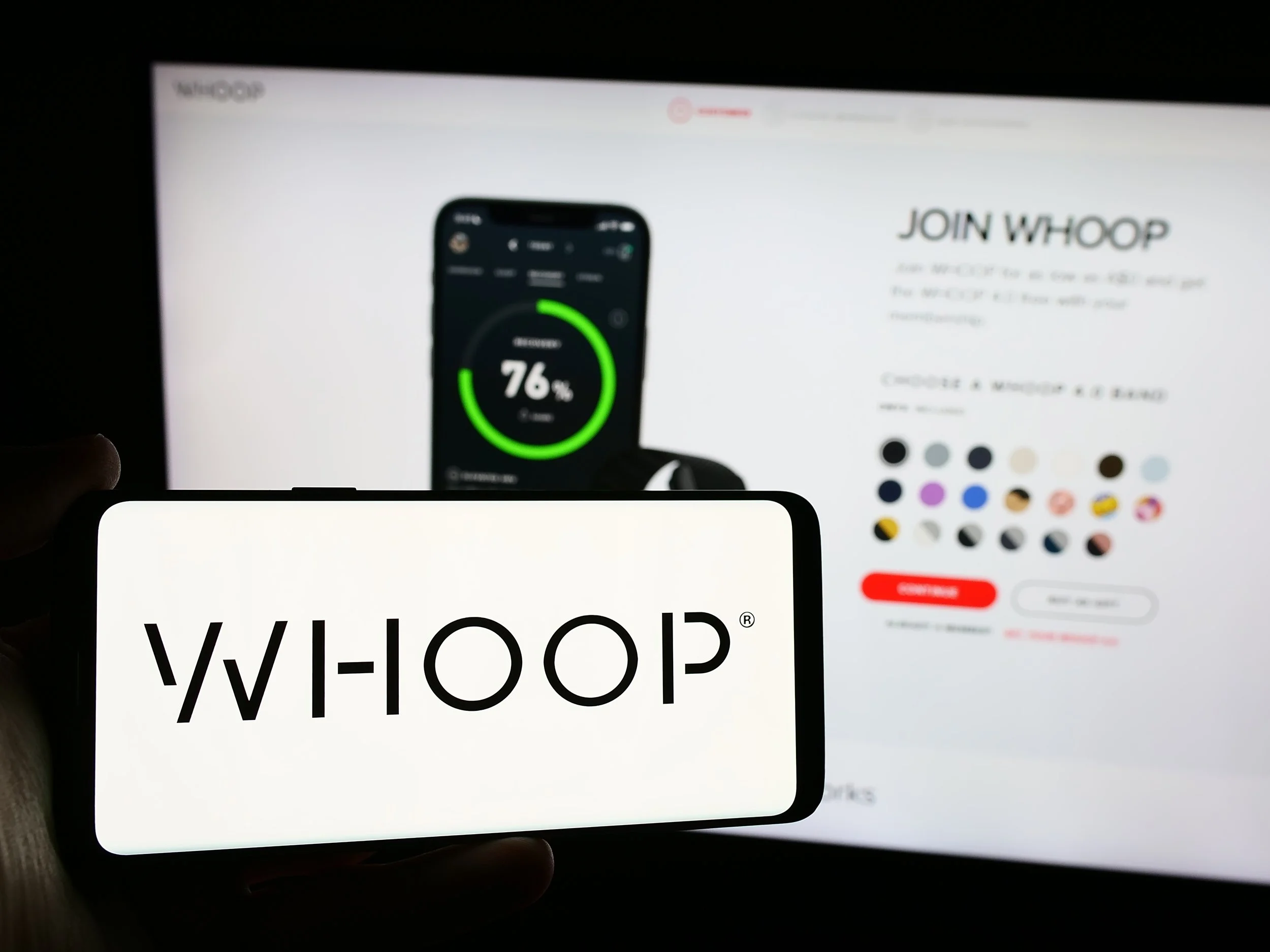
But as foreshadowed above, it is not just about marginal gains on the court or pitch. Data is also revolutionising how fans consume sport. Modern audiences expect personalised, interactive, and data‑rich experiences—whether they’re watching from the stands or streaming on a phone.
This includes real‑time statistics (such as live dashboards, predictive win‑probability models) and personalised content (platforms can use behavioural data to tailor highlights, notifications, and commentary). It also includes immersive experiences (AR visualisations, fantasy sports, and betting integrations rely heavily on accurate, fast data feeds- see for example the pivotal role that Sportradar plays in helping rightsholders, such as the NBA, engage massive global audiences and redefine how fans watch and experience sport (How Sportradar and the NBA Are Shaping the Future of Immersive Fan Engagement). And it also includes community engagement (community is increasingly at the heart of fan engagement, with social platforms amplifying data‑driven narratives).
And it is fair to say, as also foreshadowed above, that biometric data is now a key part of this immersive experience. Biometrics deepen fan understanding of and engagement with the sport. Fans are increasingly eager to see biometric insights from their favourite players, and the media ‘noise’ around the ban highlighted how much audiences now expect data to be part of the experience (not least because, as I say above, they are now routinely using these devices themselves).
Although the future (in terms of the value and importance of data) is clear, there remains a tension between innovation and regulation. As data becomes even more embedded in sport, governing bodies face new challenges. Three that spring immediately to mind are:
Competitive integrity: should all athletes have equal access to data devices (the Australian Open’s stance shows how fragmented the regulatory landscape remains);
Privacy: who ‘owns’ the biometric data; the athlete, the team, or the technology provider (from an intellectual property law perspective, it is almost certainly not the athlete, but that does not mean athletes cede control - data privacy laws prevent that); and
Commercialisation: data is now a valuable asset, driving and enhancing sponsorship and the media product.
The Future
It is not a grandiose statement to describe data as a lifeblood of sport, much in the manner media rights have been. And we can say this because the trajectory is clear: data will continue to shape both performance and fan engagement.
Wearables will become more discreet, more accurate, analytics more predictive, and fan experiences more immersive. And the WHOOP ‘controversy’ is simply a sign of a rapidly evolving ecosystem where data is indispensable, contested, and deeply influential.
And in an industry in which AI will play a central role in the future, it is worth remembering, as Adam Azor, EVP, Global Marketing at Sportradar, recently and aptly observed, “without data, and organised data, you can’t capitalise on AI”.